
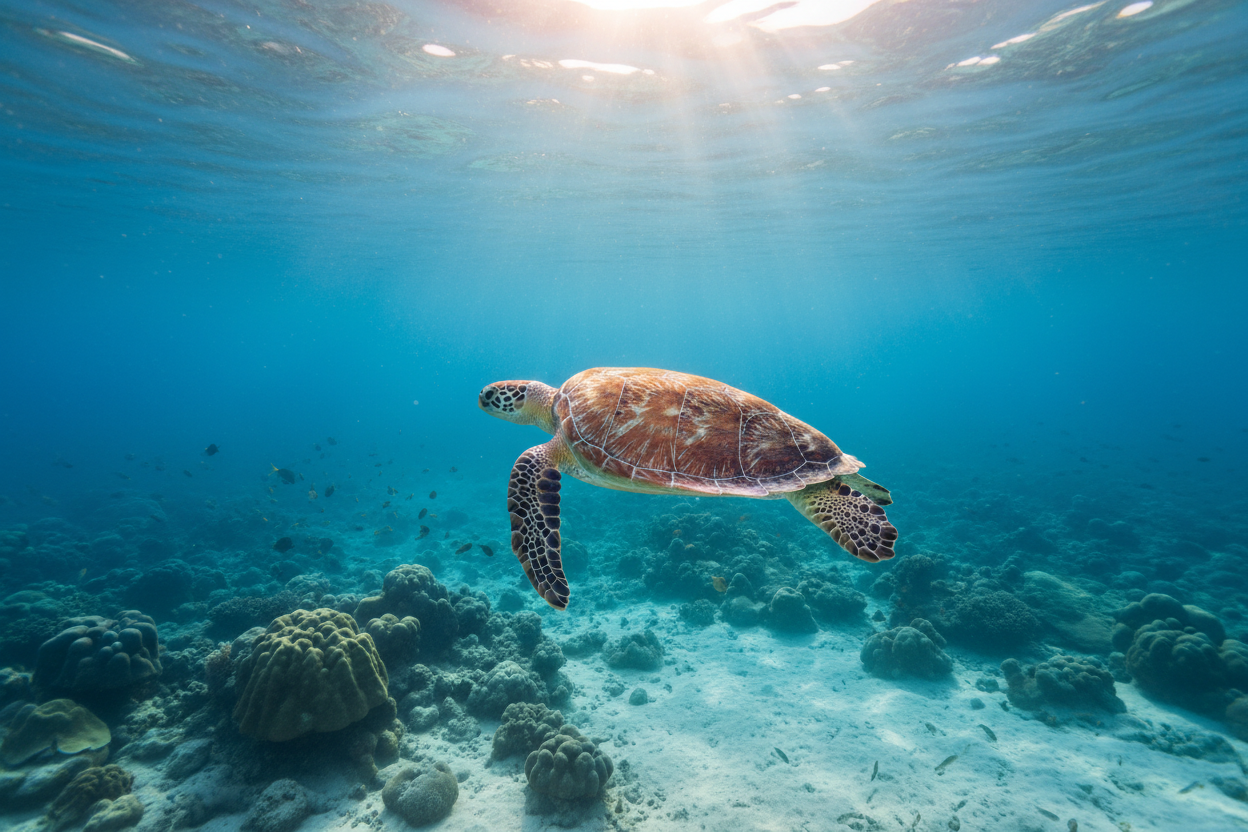
Slow Living, Local Roots, and Sea Turtle Conservation in the Banderas Bay
Every year, along the shores of the Bay of Banderas, a beautiful cycle begins again.
As nesting season arrives, female sea turtles return from the open Pacific to the beaches where they were born. Guided by instinct, they come ashore under cover of darkness to lay their eggs, continuing a migration that has existed for millions of years.
The Bay of Banderas, stretching from Puerto Vallarta into Riviera Nayarit, is one of the most important sea turtle nesting regions on Mexico’s Pacific coast. Beaches such as Boca de Tomates, Sayulita, San Pancho, and Lo de Marcos receive thousands of nests each season, primarily from Olive Ridley turtles, with additional nesting by Green turtles and, on rare occasions, Leatherback turtles — one of the most endangered marine species in the world.
Nesting typically occurs between June and December. A single turtle can lay between 80 and 120 eggs per nest, yet without protection, only a small percentage would survive. Conservation programs throughout the bay help ensure that tens of thousands of hatchlings are released safely into the ocean each year, supporting the long-term survival of these species and reinforcing the global importance of this coastline.
The Risks Sea Turtles Face
Despite their resilience, sea turtles face mounting threats, many directly linked to human activity.
Egg poaching continues to affect unprotected beaches. Turtle eggs are illegally collected for personal consumption or resale, often driven by outdated beliefs about their properties. When a nest is taken, an entire generation can be lost overnight.
Adult turtles are also at risk. Nesting females may be injured or killed by vehicles on beaches, entanglement in fishing gear, or direct human interference. Artificial lighting disorients turtles, sometimes causing them to abandon nesting attempts or move inland instead of toward the sea.
Plastic pollution presents another major danger. Turtles frequently mistake plastic bags for jellyfish, leading to digestive blockages, starvation, or death. Discarded fishing lines and nets entangle turtles, restricting movement and causing drowning. On land, accumulated waste reduces suitable nesting areas, forcing turtles to seek less viable beaches.
Conservation on the Ground
Because of these risks, protection during nesting season is essential.
Across the Bay of Banderas, turtle camps play a crucial role in safeguarding nests during the most vulnerable stages of a turtle’s life. One such organization is Nakawe A.C., a nonprofit civil association based in Puerto Vallarta.
Founded in 2023, Nakawe A.C. works to conserve Mexico’s natural and cultural heritage through sustainable development, community involvement, and environmental education. Their flagship project, the Campamento Tortuguero Boca de Tomates, operates on one of the municipality’s most active nesting beaches.
During nesting season, teams conduct nightly patrols to locate nesting turtles and vulnerable nests. Eggs are carefully relocated to protected corrals, where they incubate safely away from predators and human disturbance. The camp also manages hatchling releases, maintains nesting infrastructure, and organizes beach cleanups, particularly after heavy rains carry debris from the Ameca River to the shore.
Beyond protection, the camp functions as an educational space, training young people and engaging the local community in long-term environmental stewardship.
How We Choose to Support This Work
Living and working in this region creates an unavoidable connection to the ecosystems that surround it.
At Petit Joys, we believe the objects we create should carry meaning and awareness. The turtle figurine became part of our collection as a symbol of patience, longevity, and slow living. Over time, that symbolism naturally connected to the place we call home — where turtles return each year and where organizations like Nakawe A.C. work quietly to protect them.
As part of this connection, our turtle figurine will also serve as a small messenger — raising awareness about the vital work being done to protect these endangered species and their nesting grounds.
In the same spirit, we collaborate with a local veterinarian who rescues bees from urban environments, helping protect pollinators while producing raw honey. We also source cacao from farms that cultivate native Mexican genetic varieties, supporting biodiversity rather than industrial monocultures.
We’re in conversation with Campamento Tortuguero Boca de Tomates to make our turtle figurines available to their visitors — serving both as a symbol of the turtles they protect and as a way to generate sustained funding for their vital work.
How You Can Help
Local conservation relies on community support.
You can donate directly to Nakawe A.C. to help fund nightly patrols, nest protection, environmental education, and essential infrastructure at the camp. PayPal: nakawe.ac@gmail.com
If you choose to donate, we ask that you let Nakawe A.C. know that you learned about their work through Petit Joys’ efforts to raise awareness.
To learn more or reach out directly:
- Facebook: Campamento Tortuguero Boca de Tomates
- Instagram: @tortuguero_boca_de_tomates
A Shared Coastline, A Shared Responsibility
Every turtle that reaches the ocean carries the result of countless unseen efforts. Protecting them is not the work of one organization alone, but a shared responsibility shaped by awareness, respect, and consistent care.
Written by Khaled Bakleh
Explore our Petit Tortuga figurine — a symbol of patience, longevity, and the coastline we call home.









Leave a comment
This site is protected by hCaptcha and the hCaptcha Privacy Policy and Terms of Service apply.